
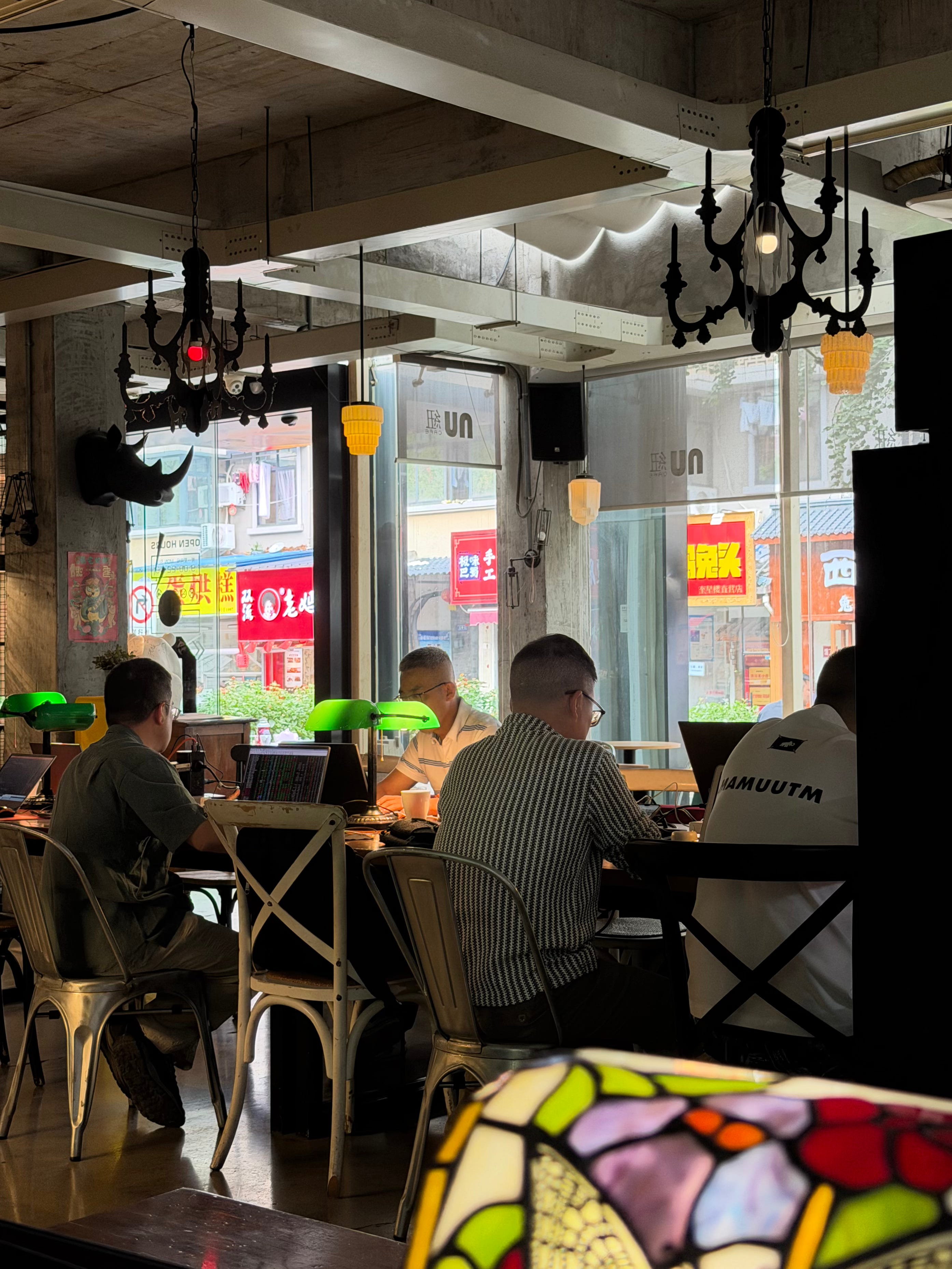
today i’m writing from a coworking cafe in chengdu, the capital of the sichuan province, where i landed on tuesday. it’s an odd place, this cafe, branded as an edgy cultural hub for alternative art and music but in reality packed with mostly middle-aged men trading stocks on laptops. everything in china has been more or less this way so far—never quite aligning with expectations, for better and for worse, in sharp contrast to japan.
our last several days in tokyo were a stark change of pace from the first few. that wednesday after my first dispatch, i hit a wall. armed with a long list of recommendations for places to go, i went from neighborhood to neighborhood all day, walking through yanaka to ueno to asakusa, then finding my way to ginza. it was too much for too little, and by the evening i was in a dark mood. the day had felt forced, aimless. i couldn’t justify why i had done all that.
by the next day, i had resolved to give myself more breathing room. we spent much more of the day in our hotel room, eating snacks from 7-eleven while watching bon appétit, your majesty, a silly and not particularly good but fun korean drama we had started back in new york. i felt guilty, maybe, for not having maximized the travel experience more (whatever that means), but it was exactly what i needed.
i began to realign, from checking the boxes toward leaning into what felt good. more rest, more space—a light-touch engineering of experience through subtraction rather than addition. flow over resistance is a lesson i apparently need to keep learning again and again until it sticks.
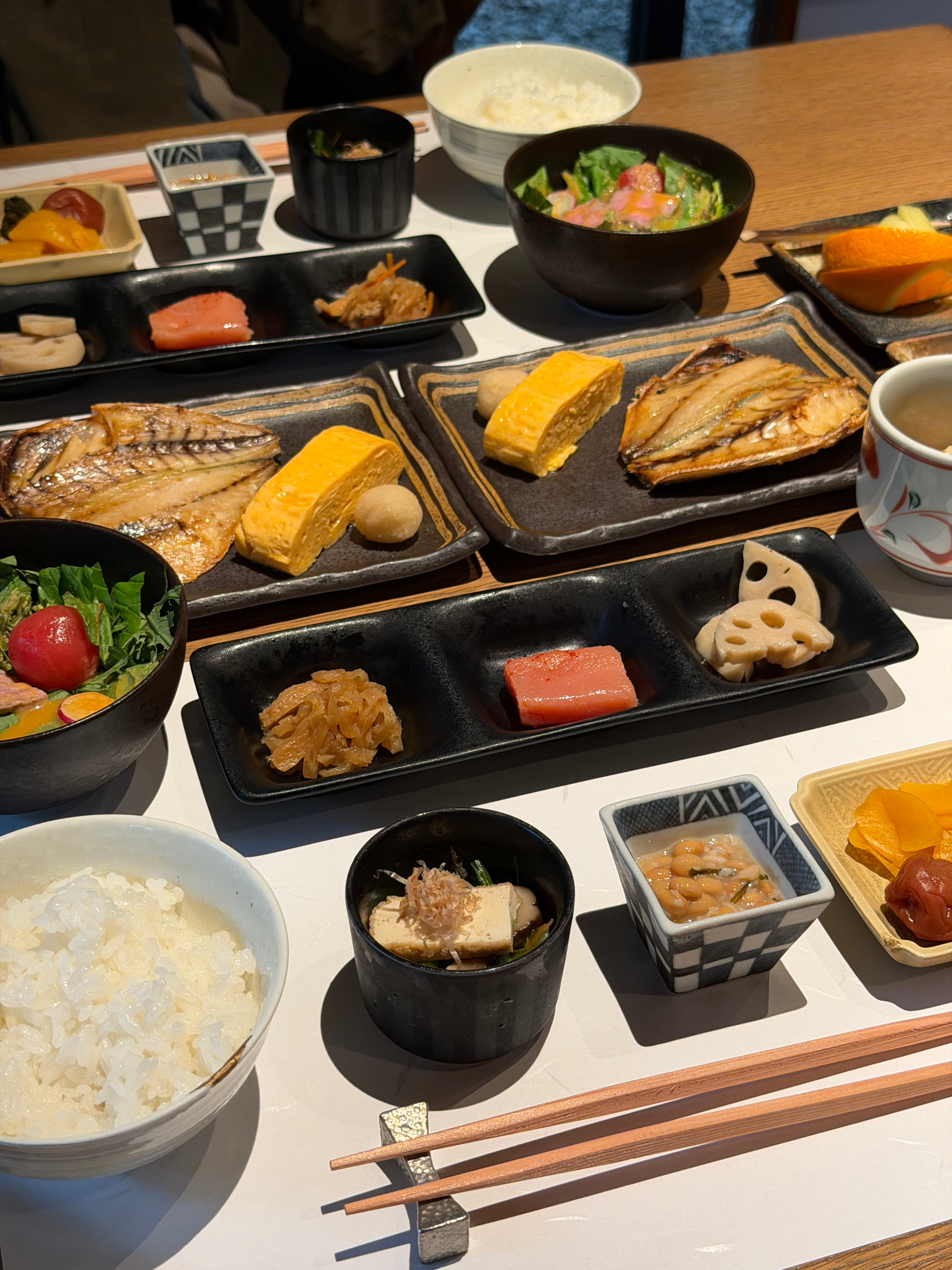
we moved from hectic shinjuku to the much quieter shimokitazawa, where we stayed at a gorgeously designed ryokan, contemporary japanese minimalism at its finest. on our first morning, we woke early for breakfast, a spectacular array of savory little dishes paired with rice, set in their serene restaurant space, and i could feel myself breathe. we had many fantastic meals in tokyo, all of which i enjoyed, but that ryokan meal was the first i was able to really savor, bite after bite, without thinking about how i was evaluating it or what was coming next.
after breakfast, we went to the onsen for a brief dip before my morning chinese lesson. as i settled into the steam room and closed my eyes, i had a visceral experience of myself as a tightly wound spool of wire, starting to uncoil. it felt wonderful and immediately frightening. my default mode is so productive and so useful, and even after having taken on the project of unlearning that, it feels dangerous. what if i let myself grow out of this shape, one i know to be economically and socially valuable, and can’t fit myself back into it when i need it again? i set aside the thought, inhaling steam.
the chic neighborhood of shimokitazawa was reminiscent of somewhere like greenpoint; even the cafes and bars heavily featured brooklyn by name. it was comfortingly familiar, albeit bizarre to have come so far in the world only to be in a vaguely similar kind of place. on my last evening, i went to a bar and spent hours chatting with several americans, three from los angeles who worked in film and graphic design and one from brooklyn who turned out to be a recently departed snl cast member. the americans at the next table recognized him. it was like we had imported a representative sample of coastal millennials to a listening bar in tokyo.
the space opened up by the slower pace led me to most of my favorite places in tokyo. magic happens when you leave room to wander.
liquid ruby: a little third-floor bar tucked into an unassuming building just across the street from our hotel. we passed it every single day without noticing, and then one day after dinner i was browsing google maps for somewhere that looked interesting and decided on a whim to try this place. after going up the stairs, there was an unmarked door that didn’t look like anything, and i opened it tentatively into what looked like a pitch-black room. i nearly backed out, sure i had intruded on some private space, but as my eyesight adjusted, i saw some people sitting, and the bartender waved me into the bar. as i took a seat, i realized everyone else was a man, most of them in suits, all of them smoking. it felt like i was transgressing on some deeply male space, and i was instantly uncomfortable but also intrigued. i ordered a paper plane. the decor was decadent, in the darkness, and there was some kind of choral music playing that gave it a monastic feel. the owner later told me it was bach’s cantatas. he did everything with such flourish—every movement, from making each cocktail to writing the check, was a performance of artful precision. i loved the intentionality of it, the specificity of the aesthetic and how wholeheartedly he had crafted it.
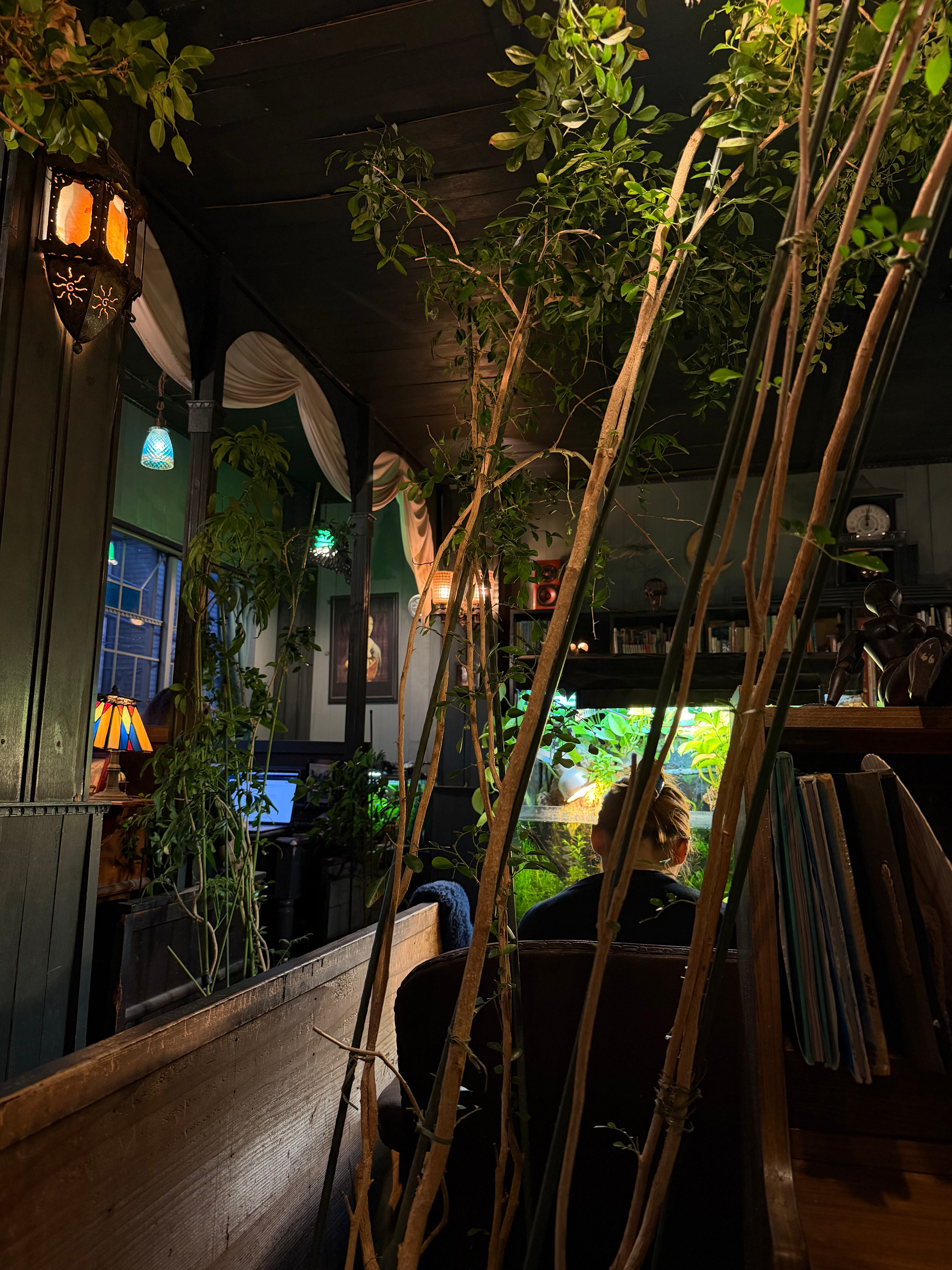
r-za dokusho kan: a cozy silent reading cafe crowded with big plants and aquariums. we were in kōenji to thrift but swiftly found ourselves tired of it and looking for a place to sit. i spotted this cafe on the map, and we went, not realizing what sort of place it was. when we opened the door, it was silent but for the trickles of water flowing into the fish tanks. i asked rachel if she wanted to leave, since it wasn’t exactly what we’d had in mind. but she was willing to stay a while, so we sat at a little desk, and i pulled out my kindle. i ordered a pot of pu’er tea, and they brought a yixing teapot, a carafe for serving, and a barely thimble-sized cup, with a thermos of boiling water. the ritual of it—pouring, then pouring, then pouring again—formed a rhythm to the time, and hours passed as we read.
bar rpm: the quintessential listening bar in tokyo, according to me. there are a lot of listening bars in the city; none of the other ones i visited came close to this one. the interior was crafted with a discerning eye, all smooth dark wood paneling and muted lighting. there was a substantiality to everything that spoke of quality. the bar bites were delicious, the cocktails perfectly balanced, the music tastefully selected and played in crystal-clear fidelity. when we were just about to leave, the proprietor, an impeccably dressed older gentleman, asked how we had heard about it. we talked to him for a while about why he opened this beautiful little bar, twelve years ago. it wasn’t complicated; he just really, really loves music.
it made me think of whether these kinds of places would be possible in new york. the thread that ran through all of them was this quality of wish fulfillment, a purity of vision uncompromised by commercial need and even alienating, probably, to many. back home, every particularity becomes a gimmick, and every halfway-decent spot is tiktoked into the ground before it even opens. places like nudibranch are the rare exception. but tokyo has such a sheer volume of these guys (not that they have to be guys, but also they were really all such Guys), and they are so wholly disinterested in making themselves legible—the specificity and the authenticity is the point. they made the place they wanted to exist.
now i’m in chengdu, renowned for its slow culture, a place where locals really know how to relish the quieter pleasures in life. slow mornings sipping pu’er at tea houses, leisurely afternoon strolls through the park, games of mahjong in the evenings. perhaps relative to other cities in china that’s true. for me, though, it’s been an instant culture shock, overwhelming and overstimulating in ways i wasn’t expecting.
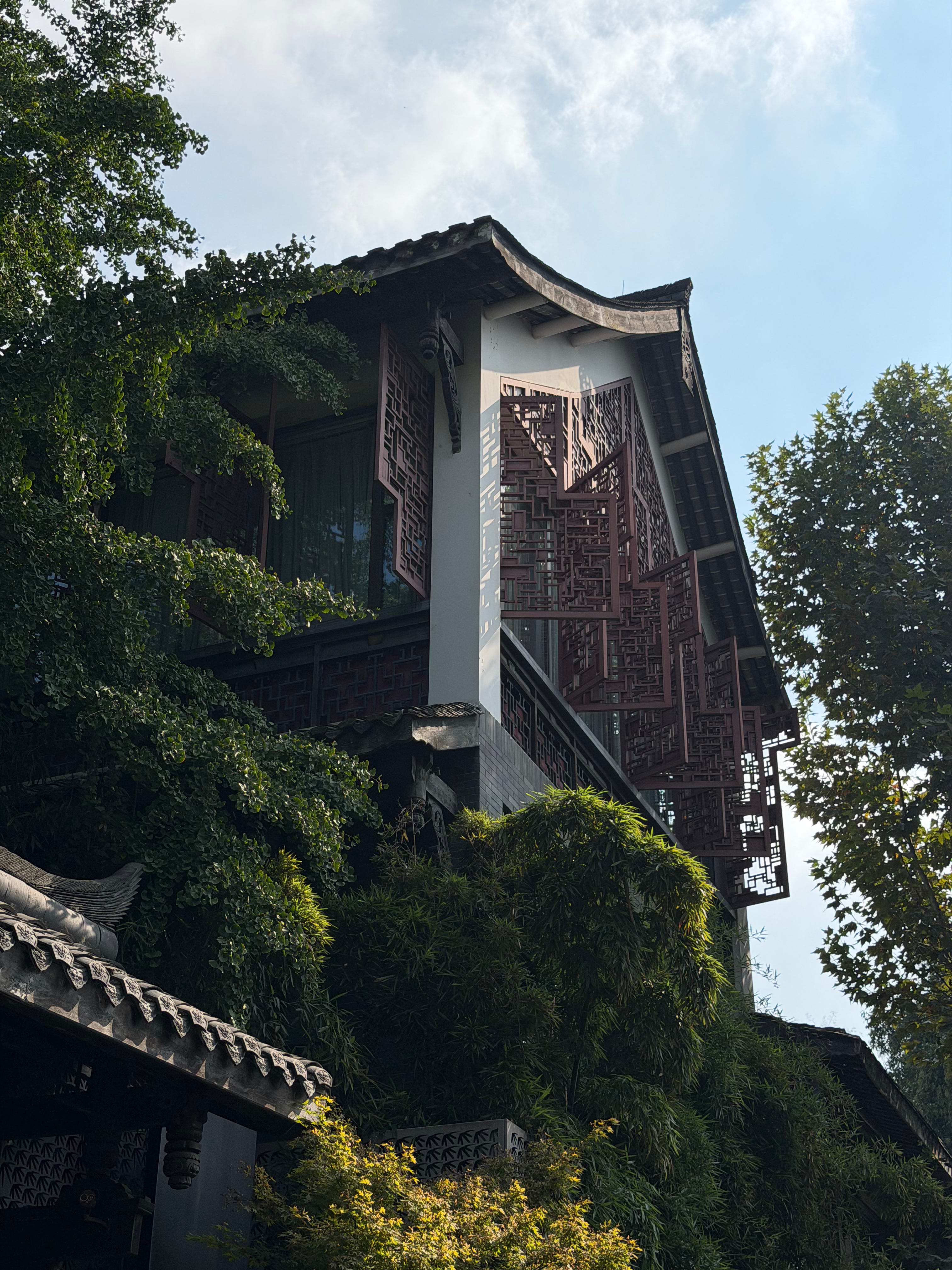
the last time i was in chengdu was in 2019, so not so long ago, but six years might as well be decades in china time. on the didi ride from the airport, i gazed out the window, taking in all the skyscrapers, the obviously newly built roads lined with plants, the massive construction sites framed with cranes lit for nighttime work. the subway network doubled in that time period alone, adding roughly 180 miles of service. that’s nearly three-quarters of the length of the entire new york city subway, built in just six years.
if japan is deeply concerned with explaining the process of how to conduct yourself in every space, china is the opposite. since i arrived two days ago, i have never known what i was supposed to do, anywhere. few places have had a real protocol for how they “work.” every process has been ad hoc, infinitely adaptable to edge cases, but also wildly chaotic as a result. in the u.s., bureaucracy and tech have had a flattening effect—streamlining everything into predictable, efficient processes. there’s a degree of systemization that, somehow, china continues to resist, even operating at this scale (or, more likely, because of that).
my first taste of that came instantly, with that airport car ride. i had connected my credit card to didi weeks ago in preparation for coming to china, but it was my first time using the chinese version of the app, and i didn’t realize it wouldn’t autocharge me upon completion of the ride. as i moved to get out of the car, the driver asked for payment on wechat, which i hadn’t finished setting up. i explained that i was paying through the app, but he wouldn’t let me leave until i sent him payment. he requested an unexpectedly low amount (68 yuan, for what didi was saying was a 223-yuan ride), and i paid him with alipay. was it a tip? wouldn’t i still get charged in the app later? baffled, i confirmed with him again that it was my payment for the ride, and he left.
but it was the equivalent of an uber driver asking for payment over venmo; the app continued to say that the trip was unpaid, obviously, and i had just paid him 68 yuan for no apparent reason. i reached out to didi support to explain what had happened, which opened up a multi-day ordeal of chats and calls in which i explained to different people, over and over again, what had happened, so that my account would be unlocked. i got another call from didi support just now, as i’m writing.
at the same time, as i had been waiting for my didi to arrive at the airport, i thought of an incident from my childhood, maybe the first time i came to china. it’s one of the more vivid memories from that trip. we had landed at the airport and gotten a cab, back when cab drivers were just guys hanging out at the entryways of airports and soliciting people for rides. as we were moving, though, the energy started to shift; we weren’t going in the right direction, and when my dad flagged it to the driver, he became stonefaced, refusing to stop or explain. it was a time before didi, long before uber, even. there was no sos button to press or location to track. my parents grew increasingly anxious, and, after some escalation, my dad eventually got the driver to let us out of the car, where we were left with our bags on the side of the road. he remains convinced that that evening would have ended quite differently if he hadn’t. set against that experience, china’s come a long way.
the defining experience of my time in chengdu thus far has been internalizing the word 抢 (qiǎng). tellingly, there isn’t a particularly precise translation in english; it’s along the lines of “seize,” or “grab,” but essentially it conveys vying competitively against others to take your part of a scarce resource. i hadn’t thought about that so deeply until today, but this concept is foundational in a lot of ways to modern chinese culture. population density strikes again. ordering noodles for breakfast? you’d better be willing to elbow others out of the way to ask for what you want. waiting in a line? make sure to not leave any space for others cut in front of you. japanese culture felt anxious and accommodating; chinese culture is unabashed and pushy by comparison. my western politeness and adherence to “rules” has felt exceedingly timid and quaint in this context. it’s good, i think—an exercise in learning to take up more space, become more comfortable having demands.
a lot of these little interactions have made me think a lot about trust. recently i read an essay by robert wu on the role of technology in moving china toward becoming a higher-trust society—specifically, surveillance in creating more accountability in interpersonal disputes and crimes. he talked about an incident where he got in a car accident where the offending party attempted to shift the blame to them, only to be curbed by the nearby surveillance cameras. it felt apropos of my own (much more trivial) experiences so far. it can be jarring to engage with a culture where there is much less trust in fairness or order, where everyone needs to fend for themselves.
younger people in china don’t have this mentality so much. wu writes about that, and i had a similar conversation with my chinese tutor this morning. she went to the hospital yesterday with her mom, where you have to get a number to wait in line. but the older people at the hospital either didn’t know or didn’t care, and without taking a number, they all queued at the door to wave down the doctors, so she felt obligated to go stand by the door, too, out of fear that she’d lose her spot to these people circumventing the system that was in place. she remarked that she wouldn’t expect that from people closer to her age unless they had a serious reason.
i’ve often wondered if any country in history has ever experienced a transformation like china’s these past few decades. it’s insane. i’ve never been able to wrap my head around it. my parents’ generation grew up in extreme, near-subsistence poverty, where eating meat at all was a major occasion, rare to experience more than once or twice a year. today’s china is overwhelmingly middle-class, speedrunning the manufacture of its own flavor of capitalist desires—escape rooms, indoor skiing, domestic luxury clothing brands, wellness retreats, pet exercise classes, whatever—to keep the wheels of the economy churning.
it’s produced a cultural whiplash, with an older generation that universally experienced severe hardship throughout their formative years and a younger generation that’s never known anything but an ascendant china where new luxuries are normalized every year. in other words, young people don’t feel the need to 抢, at least not to the same degree, because they don’t feel the same baseline level of scarcity. times have changed, but culture lags behind the economy.
to be back after so long is surreal. i thought the imprint of globalization would be a lot more pronounced this trip, and while in some ways it is, it’s been much less than i expected. so many places in the world are airspace now, homogenized with smoothed-over edges, that it’s refreshing to come to a place that is so unapologetically distinct. i’m still adjusting to the discomfort of somewhere truly foreign, and maybe that’s the whole point.