
5 a.m. in tokyo
it’s 5 a.m. in tokyo and i’ve been awake for two hours already
it’s 5 a.m. in tokyo, and i’ve been awake for two hours already. i’m sitting in the lobby of our hotel, alone except for a guy who works at the hotel cleaning the kitchen area ahead of breakfast service. the sun is supposed to rise in half an hour.
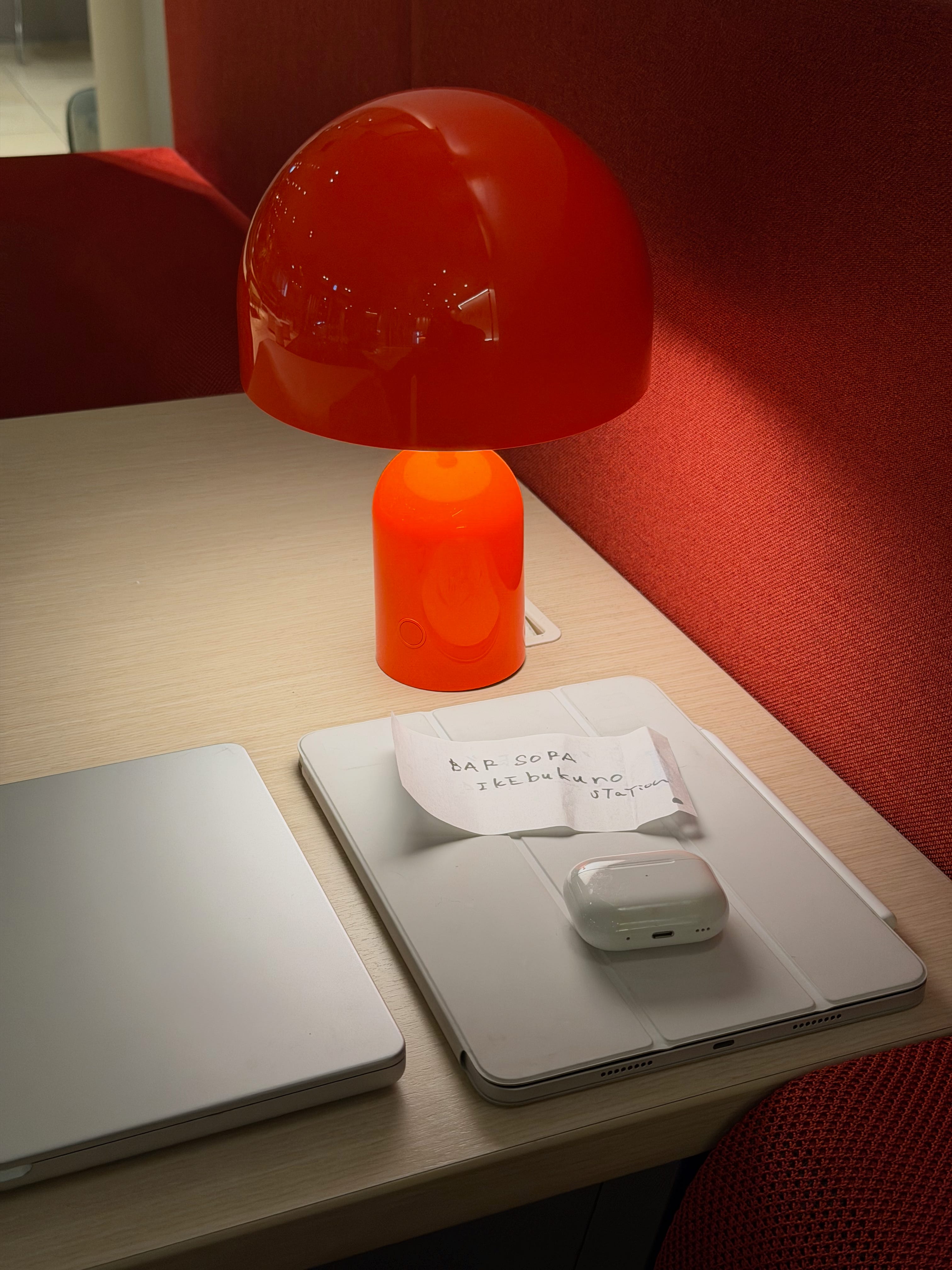
jetlag is funny. i’ve slept vanishingly little since i left new york, but my body is still resisting the time shift. yesterday, rachel and i woke at 3 a.m., and she had the (clever) idea to just go to toyosu market to sushi dai, apparently a tiktok-famous sushi restaurant where you have to line up at 5 a.m. to get a morning seating. which was perfect because i had already written off that place weeks ago; i was never going to wake that early to go, but since i was already up, why not?
we took the train and then a bus to toyosu market, which is located on a little island connected to the main city by a series of bridges. at 4 a.m., the train was shockingly full. every seat was taken. there were even people standing.
toyosu market, tokyo’s largest wholesale food market, is a really, really strange place. i don’t know what i was expecting. i think i had seen clips of the fish market from, like, jiro dreams of sushi and similar documentaries and shows about food in japan, so i was expecting density, chaos, grunge. but tsukiji market in its original form closed back in 2018, and most of the wholesale business moved to toyosu, which feels much more like a convention center than anything else. it’s huge, with long walkways and nothing in between them. it feels surprisingly corporate. there are little observation windows above the market proper, where you can see slivers of the trade happening below, but all the spaces where anything “real” is happening are cordoned off for authorized personnel only. it felt unmistakably modern, optimized for efficiency and professionalism, in a way i hadn’t anticipated.
we showed up at sushi dai, located in an odd little block in the giant toyosu market complex, at 5:30 a.m. i thought all the hype had been oversold because there was no one there. “glad we didn’t get here much earlier,” i remarked. but no, it turns out that it was empty because all the 6 a.m. seatings were already gone. a guy popped out of the closed storefront to take our names for 7:20, so we had two hours to kill.
these two hours felt like purgatory. not even in a strictly negative sense—it was fun, in a strange way, to be wandering through this bizarre sprawling venue at dawn. we went pretty much everywhere we possibly could there. we wandered through the wholesale market observation area to peer at the vendors beneath us. we walked through the maze of the goods market open to the public, where the stalls were just starting to get organized for the day. we peeked through the windows of the outdoor night market area where everything was closed. there was a roof promenade, a long stretch of walkway that looked nearly abandoned, hedges choked with weeds and half-dead. we followed it to the “rooftop garden,” which turned out to be much the same. there had clearly been a vision, at one point, for what the space could be, but the execution had left a lot to be desired. but there was this energy to exploring it that felt exciting. i was really into the idea (not so much the reality) of urban exploring, as a teenager. this wait time felt like that.
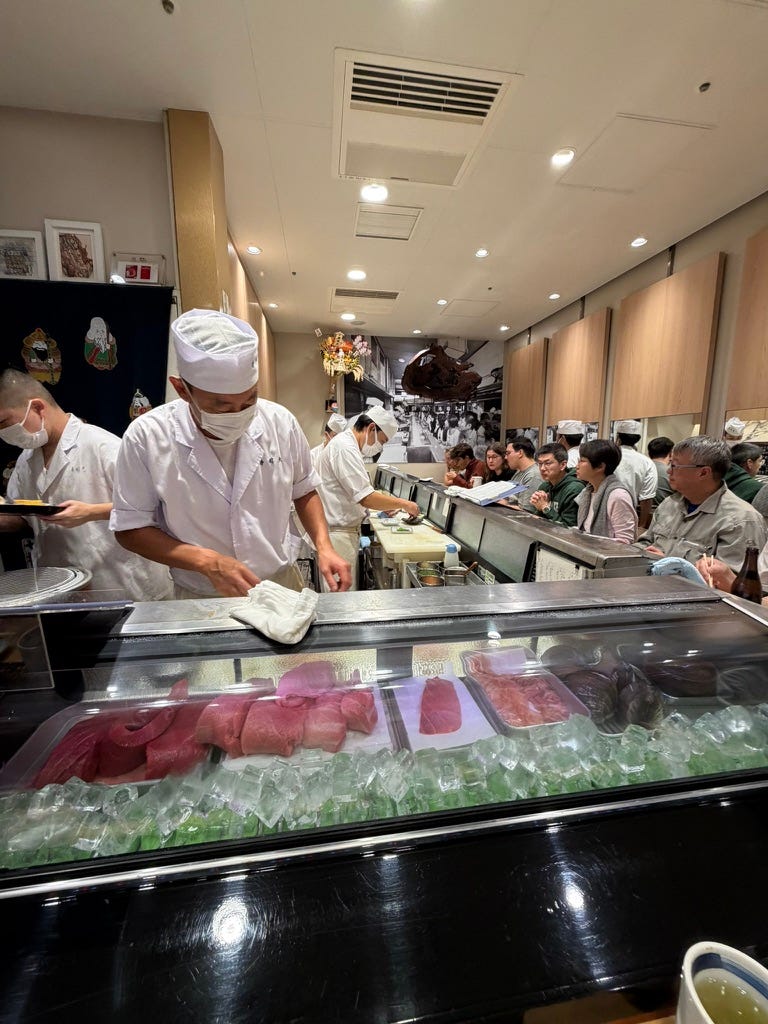
the restaurant, when we were finally seated, was great. i don’t know if i’d do it again, but what a perfect way to use the jetlag in our favor.
coming to asia, i’m always struck by the sheer number of people in cities. i kept having this thought after we landed. coming out of shinjuku station, we were surrounded by throngs and throngs of people. it felt like some kind of alice in borderland scene, but daily life in these parts of tokyo is really just like that. the pedestrian crossings are comically wide and yet still not wide enough to not get jostled by people constantly. living in new york does not compare. i mean, virtually every third-tier city in china has a bigger population than the biggest city in the u.s.
i keep thinking about all the small but crucial ways in which the population density informs east asian culture. there’s a fixation on health and cleanliness—in particular, of course, a strong fear of transmissible disease, but also a constant fight against entropy and the lived impact of tens of millions of people occupying the same space. there are a lot of rules and a strong emphasis on following rules. when there are this many people, it becomes much less acceptable for some to go rogue. and so on.
japanese culture, though, has a unique texture to it as well. there is, for lack of better phrasing, a pervasive strain of anxiety that feels deeply unfamiliar to me compared to chinese culture. it’s fascinating. the emphasis on politeness (and deep aversion to rudeness), the apologetic tentativeness, the fear of inconveniencing others. the flip side of that is that there is a layer of thoughtfulness that permeates every interaction and space. tenji blocks to guide the visually impaired line every sidewalk. the gyukatsu place we tried on our first evening had little illustrated guides on how to enjoy your meal. there is a lot of attention to comfort, both psychological and physical.
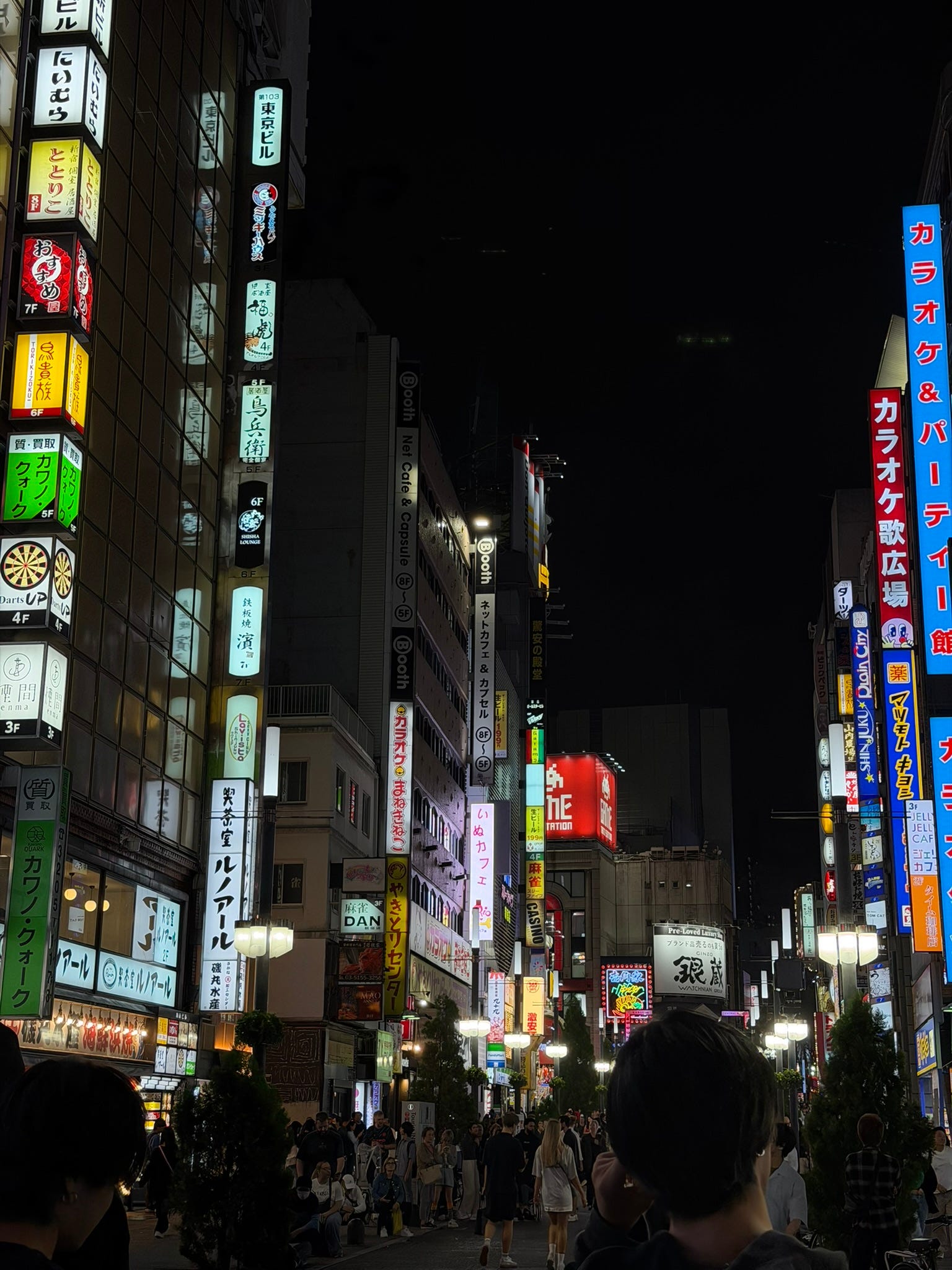
tokyo is overstimulating in a way that chinese cities are not. billboards are shouting at you, there are flashing lights and blaring sounds everywhere, public transit is more packed. china has, to be sure, a lot of people, but it’s not quite so deep in this cyberpunk future, at least not yet.
one of my intentions for this first week of my travels was to have a long conversation with a stranger. why? i’m so used to making snap judgments about people, a pattern i realized largely stems from wanting to protect myself. from what? rejection, perhaps, if we were to put it strongly, but even at a more basic level: discomfort in even the mildest forms. risk of vulnerability. so, whatever, we’re doing some kind of rejection therapy.
unfortunately it’s not working so well. or, put differently, it’s been so easy that i feel guilty that i’m not even having to try.
even before i landed in tokyo, i spent several hours chatting with the couple from asheville seated in my row on the plane. i had prejudged them; the woman had brought gifts for all the flight attendants, which was, of course, a sweet gesture but felt like the kind of move you make when you want something. like the kid who brings gifts for all the teachers on the first day of school. i want to say that, throughout the fourteen hours we were on this flight, every single flight attendant came by our row to thank them and ask if they wanted anything.
but we got to talking, and of course the story was more complex than that. the woman was, in fact, a flight attendant—the vp of her union, even. and so she brings small gifts on every flight because she gets what it’s like. her partner was a software developer at an edtech company. the conversation went in all kinds of directions. she told me about her upbringing in a fanatically religious family in florida, where she was homeschooled and disallowed from wearing pants and taught she would go to hell if she wasn’t saved in the rapture. i talked about my recent breakup, ending a nine-year relationship and suddenly finding myself revisiting every part of my life. her partner told me about searching for a native species of animal on every trip; he had spent their time in croatia searching for a particular kind of hedgehog, and this time he would be looking for tanuki in japan. they told me about going a month without power or running water after the hurricane hit asheville last year—how traumatizing it was to be so fully cut off from the outside world but also perversely fun to be thrown into an alternate universe for how life could be for a while. we talked about how we used ai (she, shockingly, has been a die-hard chatgpt user since it launched three years ago and has been using it heavily to navigate her union work) and whether we wanted kids and what kinds of movies and podcasts and games we liked.
it reminded me of why i love talking to strangers, even though i typically find myself too socially inhibited to do it. these kinds of conversations have been some of the most meaningful of my life. people are interesting. like, i genuinely believe that every single person is interesting. but it can be easier, more efficient, to forget that fact most of the time. it saves you the hassle of having to navigate a person with a foreign worldview, who might react in unexpected ways to your own.
after we landed, we were desperate to not succumb to sleep too early and sore and uncomfortable from the long flight, so we decided to go get massages at a place with five stars and nine thousand reviews on google. it turned out to be surprisingly... chinese? they eagerly defaulted to chinese with me, and i ended up chatting for a lot of the hour with my masseuse, a taiwanese guy. the owner of the business was taiwanese, he explained, and most of the employees were chinese, taiwanese, or vietnamese.
i remarked that there were a lot more chinese people in tokyo than i had expected; walking around the streets of shinjuku, i could have sworn i heard more chinese than japanese, though that’s likely cultural as much as anything else (chinese people are loud and often in groups as tourists, whereas japanese people are much more reserved and tend to be power-walking to work or home). rachel looked it up later, and apparently there are an estimated one million chinese people living in japan, a number that’s risen dramatically in more recent years. i assume the real number at any given point in time including tourism is significantly higher.
we talked for a while about my upcoming travels through china and his time in japan. he was puzzled at a lot—why i spoke chinese in the first place, how i was able to take a few months to travel through asia, what we were doing in japan if we didn’t have much of a plan to do a lot of tourism, like going to disneyland. there was something about explaining my life and my decisions, in a language with which i’m less fluent, to someone with such a different life experience, that simultaneously created distance and closeness.
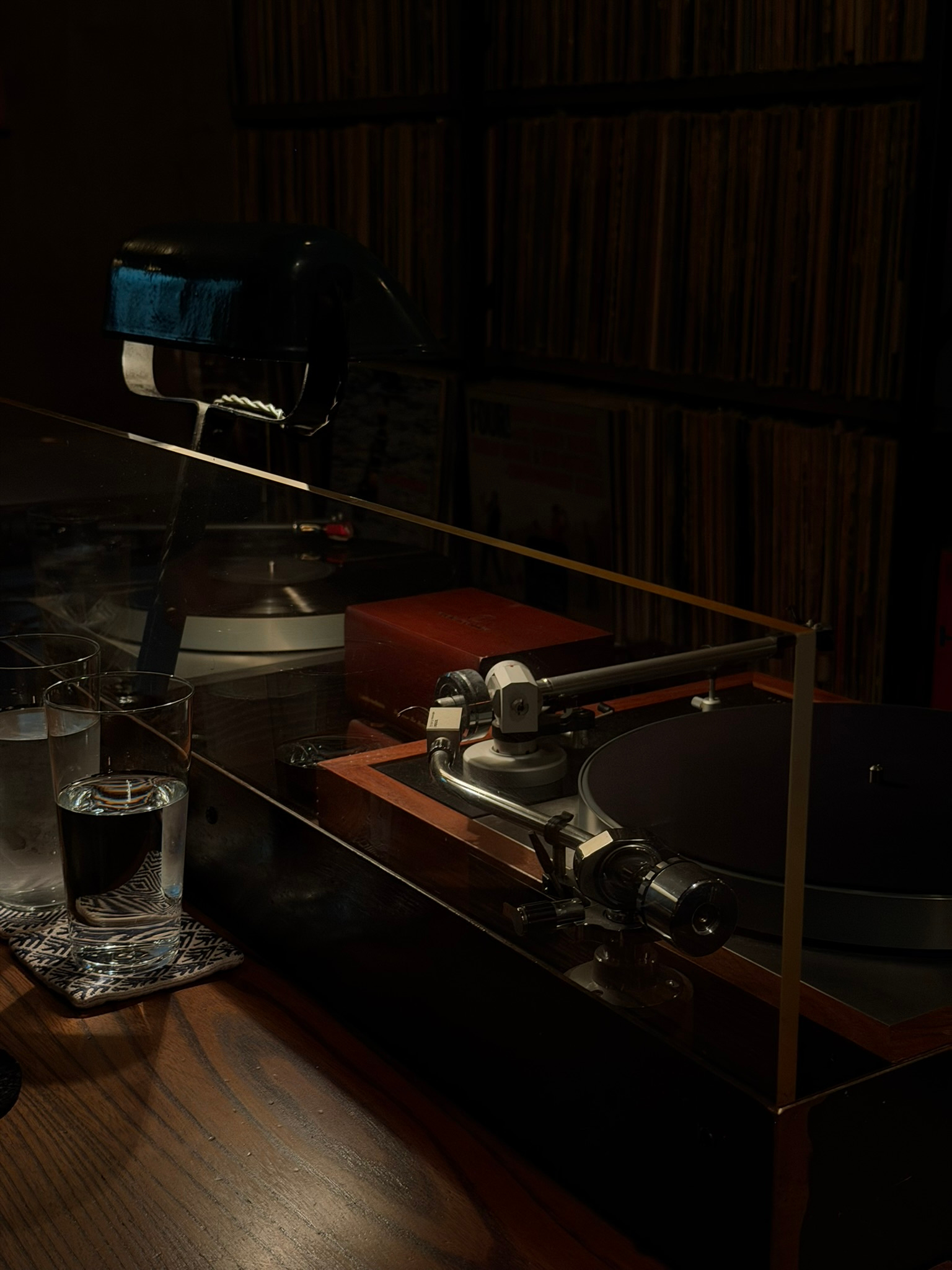
the third conversation came last night, when rachel and i went to golden gai after a yakitori dinner. we’d been anticipating this experience a lot—there’s a village at burning man called golden guy that’s a loose recreation of this area of tokyo, a chain of narrow alleyways packed with tiny bars, just a few seats each. i’ve always loved golden guy; two of our friends, alexis and paul, ran a y2k cyber cafe bar there for a few years, and the attention to detail and commitment to their bit was absolute. so i was excited for the real deal, and, in fact, coming to golden gai felt eerily familiar. the burning man incarnation does an exceptional job of capturing the feel of this place, down to the obnoxious tourists who are drawn to it.
we ended up at a little bar called bay window, staffed by two young women. i ordered a paper plane, and rachel got a yuzu gin sour. there was a loud group of americans by the window, and at one point, we overheard them say the word “pedophilia,” and rachel and i both looked at each other, and this guy next to us raised an eyebrow and smiled, clearly having heard it as well. we started talking. he was from ottawa, and he was on his second day of a two-month trip as well. there was an odd symmetry to it. he was spending the whole time in japan; he had done the same in the philippines last year, and he was planning to do a similar trip to china next year. i asked him what he did that he was able to spend two months of every year traveling through asia.
it turned out he’s an environmental engineer; he works on remediation for the largest open-pit lead-zinc mine in the world, now leaching heavy metals into the water and land in the yukon. it is, supposedly, a twenty-year project, an absolutely unimaginable concept to me as a person in tech used to thinking in weeklong sprint cycles. he spends cycles of three weeks working and then three weeks off, and so if he lines it up right, he’s able to take a long vacation. he spends half his life in a normal canadian city and half his life in a town of four hundred people in the yukon where the nearest grocery store requires a four-hour drive.
we talked about his travels. even from the first day, he’d already made friends with some irish guy, and they’d been hitting the bars together since then. he always travels places on his own, since most of his friends are married and (he implied) boring. there is a solo traveler’s mindset i’ve always found really interesting, among people who travel often alone—a receptiveness to experience, an ease with spending time. a comfort with letting your time unfold however it may, your attention be drawn wherever feels natural. i am, of course, working to cultivate it in myself, but it’s the kind of domain where you can’t try too hard. effortful trying just makes it more elusive; if anything, you have to try less.
we talked about burning man (explaining golden guy) and alone and rachel’s tiktok parties. he told us about his one visit to new york (driving, all the way from canada, with his “boys” back when they were all eighteen or nineteen). he’s twenty-nine, turning thirty soon. he figures he’ll start to “settle down” in the next year or so. i thought about how much my life has changed since i turned thirty, in many ways the opposite direction. life is long and strange and remarkably dense with experience. the world is a big place, and there are a lot of people in it, and all of them have interesting stories, and many of them want to hear yours.
it’s daytime now. i should stay awake. wish me luck.